Best Partial Knee Replacement Surgery in Kadi
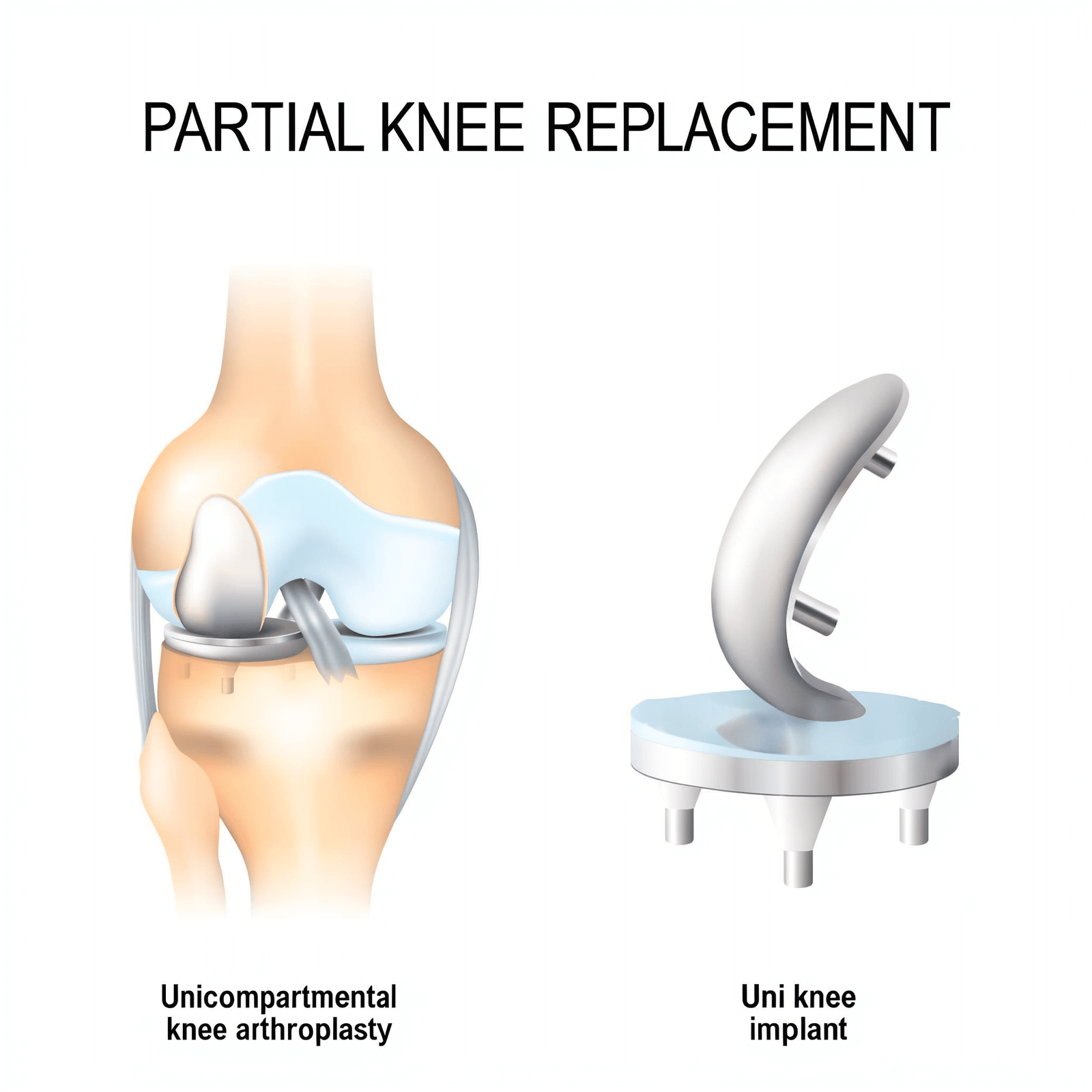
When joint degeneration or osteoarthritis affects only one specific section of the knee, replacing the entire joint is often unnecessary. Partial Knee Replacement (PKR), also known as Unicondylar Knee Arthroplasty (UKA), offers a targeted, bone-preserving alternative to total joint replacement.
At Satyam Surgical and Orthopedic Hospital, located on Nani Kadi Road in Kadi, Gujarat, our skilled orthopedic specialists perform high-precision partial knee replacements. By replacing only the damaged compartment while retaining your healthy bone, natural cartilage, and crucial ligaments (such as the ACL and PCL), we help patients achieve faster recovery, less post-operative pain, and a natural joint movement.
What is Partial Knee Replacement Surgery?
Partial Knee Replacement is a minimally invasive surgical procedure where only the diseased or worn-out compartment of the knee joint is resurfaced with biocompatible metal and high-density plastic components.
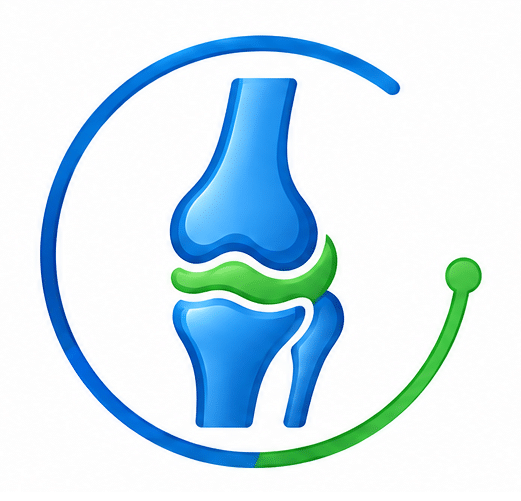
The human knee joint is divided into three main compartments:
-
Medial Compartment: The inner side of the knee joint (most commonly affected by early-stage osteoarthritis).
-
Lateral Compartment: The outer side of the knee joint.
-
Patellofemoral Compartment: The front section of the knee behind the kneecap.
If severe cartilage damage or wear is limited to just one of these compartments and the surrounding knee ligaments remain intact and healthy, a partial replacement is an ideal surgical option.
Who is an Ideal Candidate for Partial Knee Replacement?
-
Localized Knee Pain: Severe joint stiffness or pain isolated predominantly to the inside or outside of the knee.
-
Intact Ligaments: Healthy, functional anterior cruciate ligament (ACL) and posterior cruciate ligament (PCL).
-
Preserved Cartilage: Good cartilage thickness in the remaining untreated compartments of the knee joint.
-
Minimal Joint Deformity: Absence of severe bow-leg or knock-knee deformities that affect the stability of the entire joint.
-
Failed Conservative Care: Persistent localized pain that no longer responds to medications, intra-articular injections, or physical therapy.
Our Partial Knee Replacement Services:
At Satyam Surgical and Orthopedic Hospital, we provide comprehensive orthopedic care tailored to your joint health:
-
Advanced Diagnostic Imaging: Digital high-resolution X-rays and MRI evaluations to precisely map joint damage and confirm single-compartment disease.
-
Minimally Invasive Unicondylar Resurfacing: Precision placement of US FDA-approved implants through smaller incisions, minimizing soft tissue disruption.
-
Ligament-Sparing Joint Techniques: Preserving your natural cruciate ligaments to maintain native joint proprioception and balance.
-
Multi-Modal Pain Control: Motor-sparing regional nerve blocks (such as adductor canal blocks) and localized analgesia allow early post-surgical movement with minimal pain.
-
In-House Physical Therapy: Dedicated post-op rehabilitation programs focused on restoring quadriceps strength and rapid range of motion.
-
PMJAY Scheme Access: Empaneled under PMJAY (Pradhan Mantri Jan Arogya Yojana), providing cashless surgical services for eligible cardholders.
Benefits of Advanced Care:
Selecting partial knee resurfacing over full joint replacement offers distinct clinical advantages when candidate criteria are met:
-
Faster Post-Operative Recovery: Smaller incisions and less tissue disruption allow patients to resume light daily activities much sooner.
-
Natural Knee Function: Retaining intact natural ligaments allows the knee to bend, flex, and rotate more naturally than a total replacement.
-
Lower Immediate Post-Op Pain: Minimal disturbance to surrounding bone and soft tissue leads to less post-surgical inflammation and pain.
-
Shorter Hospitalization: Most partial knee patients are ready for discharge within 1 to 2 days after surgery.
-
Future Revision Versatility: Preserving healthy bone stock keeps joint structures intact if a total joint conversion becomes necessary decades later.
Comprehensive Treatment Care & Recovery Pathway:
Step 1: Pre-Operative Assessment
Our orthopedic specialists perform physical examinations and specialized alignment X-rays to ensure arthritis is confined strictly to one compartment and ligaments are fully functional. Pre-admission screening includes routine cardiac and blood profiles for overall surgical safety.
Step 2: The Surgical Procedure
Under regional anesthesia, a small incision is made over the affected joint area. The damaged cartilage and a minimal amount of underlying bone are removed. Biocompatible metal implants are cemented onto the bone ends, with a durable smooth plastic insert placed in between to act as new joint cushioning. The surgery usually takes under 60 minutes.
Step 3: In-Hospital Recovery
-
Day 1: Assisted standing and walking using a walker within hours after surgery under physical therapist supervision.
-
Day 2: Active knee bending exercises reaching 90 degrees or more, accompanied by stair climbing training.
-
Discharge: Patients typically return home comfortably on Day 1 or Day 2.
Step 4: Home Rehabilitation
-
Weeks 1 to 2: Continuation of home exercises and gradual transition from a walker to a cane or unassisted walking.
-
Weeks 3 to 4: Full unassisted walking, driving, and comfortable return to routine domestic work.
Why Choose Satyam Surgical and Orthopedic Hospital in Kadi?
-
Focused Orthopedic Expertise: Skilled surgeons experienced in modern joint reconstruction and tissue-sparing techniques.
-
Modern Surgical Infrastructure: Sterile operation theaters equipped with specialized orthopedic tooling to reduce infection risks.
-
Empaneled under PMJAY: Cashless healthcare services for eligible government health cardholders.
-
Accessible Local Care: Conveniently located on Nani Kadi Road in Kadi, eliminating the need to travel to far cities for routine joint check-ups and post-op physiotherapy.