Best Kidney Stone Treatment in Kadi
Kidney stones (renal calculi) cause intense abdominal and flank pain, affecting thousands of individuals across Gujarat every year. Satyam Surgical and Orthopedic Hospital in Kadi provides comprehensive, minimally invasive kidney stone treatments – including advanced laparoscopic, endoscopic, and laser procedures – ensuring rapid recovery with minimal discomfort.
Located on Nani Kadi Road, our multi-specialty facility offers full-spectrum urological evaluation, precise diagnostic imaging, advanced surgical interventions, and post-treatment preventive care.
What is a Kidney Stone?
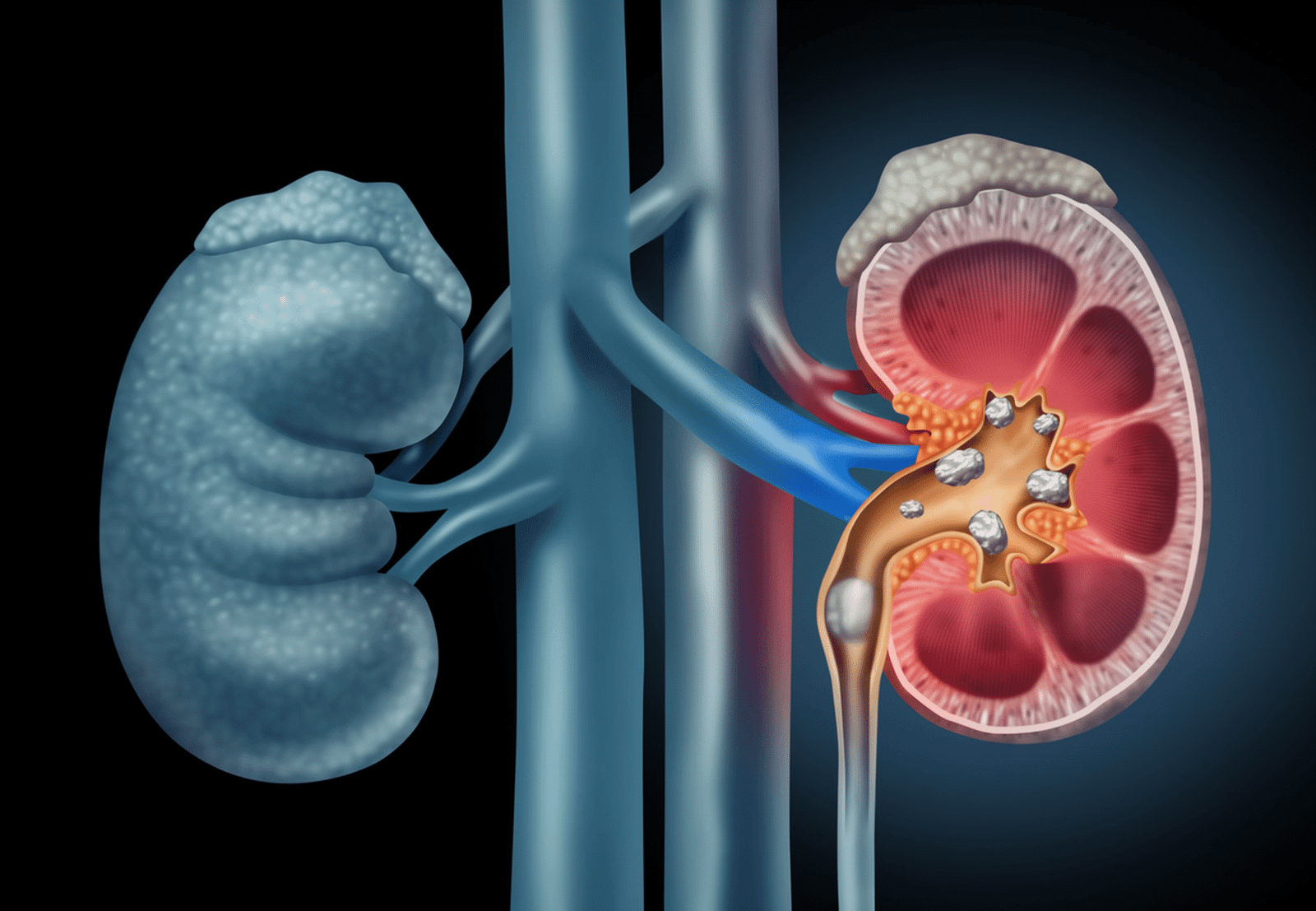
A kidney stone is a hard, crystalline mineral deposit that forms within the kidneys or urinary tract. These stones develop when urine becomes overly concentrated, allowing minerals such as calcium, oxalate, uric acid, and phosphate to crystallize, stick together, and form hard masses.
Kidney stones vary in size from small, sand-like grains to large, branched structures (staghorn calculus) that can obstruct the ureter or renal pelvis. While smaller stones may pass spontaneously through fluid intake, larger or persistent stones require specialized surgical evaluation and intervention to prevent irreversible kidney damage or severe urinary tract infections (UTIs).
Conditions Treated:
Our surgical team in Kadi addresses various complex stone diseases and urinary conditions:
-
Calcium Stones (Calcium Oxalate & Calcium Phosphate): The most common type of renal stone, frequently caused by high dietary oxalate, dehydration, or metabolic factors.
-
Uric Acid Stones: Commonly seen in individuals with high protein intake, gout, or persistent dehydration.
-
Struvite Stones: Fast-growing, large stones caused by chronic urinary tract infections (UTIs) that can block the kidney, bladder, or ureters.
-
Cystine Stones: Rare, hereditary stones resulting from excessive secretion of the amino acid cystine into the urine.
-
Ureteral Stones: Kidney stones that migrate into the ureter, blocking urine flow and causing acute, severe flank pain (renal colic).
-
Bladder Stones: Hardened mineral masses that develop in the bladder when urine is retained due to incomplete emptying or structural blockages.
Common Symptoms of Kidney Stones
Recognizing kidney stone symptoms early helps avoid emergency urinary blockages or permanent kidney impairment. Seek medical care if you experience any of the following:
-
Severe Flank or Back Pain: Intense, sharp pain in the side and back, below the ribs, which often radiates to the lower abdomen and groin.
-
Painful Urination (Dysuria): A burning sensation or pain during urination, often accompanied by a persistent urge to urinate.
-
Blood in Urine (Hematuria): Urine appearing pink, red, or brown due to mechanical irritation of the urinary lining caused by moving stones.
-
Turbid or Foul-Smelling Urine: Cloudiness or strong odor in urine, often signaling a secondary urinary tract infection.
-
Nausea and Vomiting: Gastrointestinal discomfort triggered by shared nerve pathways between the kidneys and GI tract during acute severe pain.
-
Fever and Chills: Warning signs indicating a serious, complicated urinary tract infection alongside stone obstruction, requiring immediate hospital care.
Our Services Include:
Satyam Surgical and Orthopedic Hospital offers advanced diagnostic, non-surgical, laparoscopic, and endoscopic management tailored to stone size, location, and density.
1. Diagnostic Imaging & Evaluation
-
High-Resolution Ultrasonography (USG): Initial, non-invasive imaging to identify stone presence, location, and signs of hydronephrosis (swelling of the kidney).
-
Non-Contrast Computed Tomography (NCCT KUB): The gold standard diagnostic tool to accurately map stone size, precise location, and hardness (Hounsfield units).
-
Kidney Function Tests (KFT): Blood and urine panels to assess baseline renal health, serum creatinine, and metabolic balance.
2. Medical Management & Dissolution Therapy
-
For smooth, small stones (less than 5mm), conservative treatment using targeted alpha-blockers, hydration protocols, and alkalinizing agents promotes natural expulsion while managing pain effectively.
3. Laparoscopic Urological Surgery
-
Laparoscopic Ureterolithotomy & Pyelolithotomy: Performed through keyhole incisions, this approach directly accesses and extracts large, impacted ureteral or renal stones when endoscopic techniques are impractical.
4. Endoscopic & Laser Treatments
-
Ureteroscopy (URS) / Retrograde Intrarenal Surgery (RIRS): Flexible endoscopes pass through natural urinary pathways to fragment stones inside the ureter or kidney using precise laser energy, avoiding external incisions.
-
Percutaneous Nephrolithotomy (PCNL): A minimally invasive technique utilizing a keyhole opening in the back to remove large or complex staghorn calculi directly from the kidney.
Benefits of Laparoscopic and Minimally Invasive Care:
Laparoscopic and keyhole urological procedures offer clear advantages over traditional open surgeries:
- Minimal Incisions: Tiny 5-10mm keyhole marks eliminate large surgical scars.
- Reduced Postoperative Pain: Less tissue disruption significantly reduces pain and discomfort.
- Shorter Hospitalization: Rapid recovery allows most patients to return home within 24 to 48 hours.
- Lower Risk of Infection: Closed, minimally invasive techniques reduce surgical site infection risks.
- Faster Return to Normal Activity: Patients resume daily routines and work significantly sooner.
Comprehensive Care & Recovery Protocol
Our care model supports patients from initial diagnosis through long-term prevention:
-
Pre-Operative Assessment: Complete diagnostic workup, blood analysis, cardiac evaluation, and personalized anesthesia planning.
-
Surgical Precision: Procedures performed by experienced surgical teams using advanced monitoring, hygienic operating theaters, and strict safety standards.
-
Post-Operative Recovery: Attentive nursing care, continuous vital monitoring, and tailored pain management protocols.
-
Metabolic Evaluation & Prevention: Post-recovery stone composition analysis, 24-hour urine evaluation, and individualized dietary guidance (balancing fluid, sodium, and calcium intake) to prevent recurrent stone formation.