Specialized Revision Knee Replacement Surgery in Kadi
While primary knee replacement surgeries are overwhelmingly successful and last for decades, artificial implants can eventually experience wear, loosening, structural instability, or infection over time. When a previously replaced knee becomes painful, stiff, or unstable, Revision Knee Replacement Surgery (Revision Arthroplasty) provides a reconstructive solution to repair the joint and restore functional mobility.
At Satyam Surgical and Orthopedic Hospital, located on Nani Kadi Road in Kadi, Gujarat, our experienced orthopedic team provides specialized complex joint revision services. Utilizing specialized long-stemmed implants, bone-grafting techniques, and high-precision surgical suites, we help patients from Kadi, Mahesana, and neighboring regions overcome failed primary implants and regain joint stability.
What is Revision Knee Replacement Surgery?
Revision Knee Replacement is a complex surgical procedure in which an orthopedic surgeon removes some or all components of an original, worn-out, loose, or infected artificial knee implant and replaces them with specialized reconstructive implants.
Unlike primary knee replacement—where pristine bone cartilage is resurfaced for the first time—revision surgery involves working with pre-existing implant sites, reduced natural bone stock, and altered soft tissue structures. To ensure firm joint anchorage, revision implants feature specialized long intramedullary stems, metallic augments, or bone graft substitutes that secure deep into the thigh bone (femur) and shin bone (tibia).
Common Indications for Revision Surgery:
- Aseptic (Non-Infected) Loosening: Mechanical wear and tear over decades can cause the cement or bond between implant components and bone to loosen, creating painful friction.
- Periprosthetic Infection: Bacterial contamination around the artificial joint components, requiring specialized two-stage cleaning, antibiotic spacer insertion, and final implant re-implantation.
- Joint Instability & Ligament Laxity: Stretching or weakening of surrounding knee ligaments, making the knee feel like it gives way during walking.
- Periprosthetic Fractures: Bone fractures occurring directly around the stems of existing artificial implants due to falls or trauma.
- Implant Wear & Tear: Breakdown of the plastic polyethylene spacer over 15–25 years, causing bone-on-metal contact.
Our Revision Knee Replacement Services:
At Satyam Surgical and Orthopedic Hospital, we handle complex joint revisions with dedicated surgical care and comprehensive post-operative support:
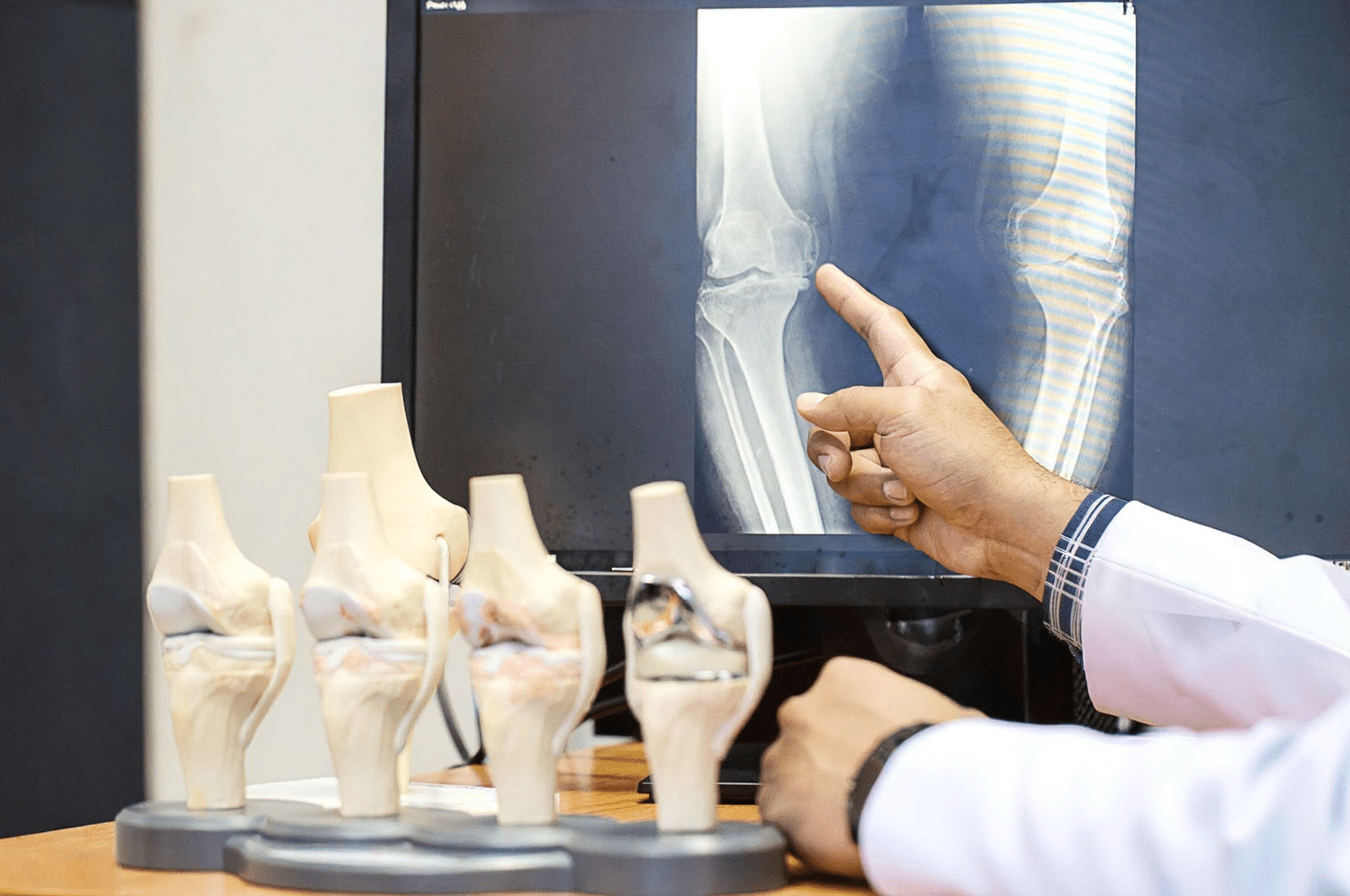
- In-Depth Diagnostic Workup: Digital X-rays, CT scans, blood inflammatory markers (ESR, CRP), and joint fluid aspiration to rule out infection before planning hardware replacement.
- Single-Stage & Two-Stage Revisions: Customized surgical management for mechanical failures (single-stage) or deep-seated prosthetic infections using temporary antibiotic spacers (two-stage).
- Augmentation & Bone Grafting: Reconstruction of underlying structural bone loss using specialized porous metal wedges, sleeves, and synthetic bone graft material.
- Complex Deformity & Alignment Correction: Re-establishing proper mechanical leg alignment and joint height for smooth walking balance.
- In-House Rehabilitation & Physiotherapy: Tailored post-surgical physical therapy protocols designed to protect reconstructed bone while safely regaining muscle strength.
- PMJAY Scheme Support: Empaneled under PMJAY (Pradhan Mantri Jan Arogya Yojana), providing cashless surgical options to eligible cardholders.
Benefits of Advanced Revision Care:
- Relief from Persistent Joint Pain: Eliminates pain caused by loose, shifted, or worn-out primary components.
- Restored Leg Stability: Corrects “giving way” sensations, allowing safe, confident walking without fear of falling.
- Preservation of Limb Function: Reconstructs bone defects to maintain leg length, joint alignment, and overall mobility.
- Improved Quality of Life: Enables patients to return to self-reliant daily living without constant pain.
Comprehensive Treatment Care & Recovery Journey:
Step 1: Pre-Operative Diagnostic Planning
Before revision surgery, our team conducts thorough evaluations. Specialized X-rays map bone loss, while blood tests verify that the joint is free from infection. Implant templates are prepared to select the ideal stem length and augmentation wedges.
Step 2: The Surgical Procedure
Under anesthesia, the surgeon carefully opens the original incision, removes loose or worn implants, and cleans surrounding scar tissue. Bone defects are reinforced with metallic augments or grafts. New long-stemmed components are securely anchored into the leg bones, and a new high-density plastic spacer is placed.
Step 3: In-Hospital Recovery & Mobilization
- Days 1 to 2: Protected standing and assisted walking with a walker under physical therapy guidance, using motor-sparing nerve blocks for pain management.
- Days 3 to 4: Gentle joint bending exercises and stair climbing training tailored to the stability of the bone reconstruction.
- Discharge: Patients are discharged once pain is controlled and mobility is safe.
Step 4: Home Rehabilitation
- Weeks 1 to 4: Continued home physical therapy, wound care, and gradual weight-bearing as guided by the surgeon.
- Weeks 6 to 12: Progressive strengthening of the quadriceps and hamstring muscles to achieve independent unassisted walking.
Why Choose Satyam Surgical and Orthopedic Hospital in Kadi?
- Experienced Orthopedic Team: Surgical expertise in handling complex joint reconstructive procedures, trauma care, and revision cases.
- Sterile Surgical Infrastructure: Advanced operation theaters equipped for sterile joint procedures to minimize infection risk.
- Empaneled under PMJAY: Cashless healthcare access for eligible government health cardholders.
- Centrally Located in Kadi: Located on Nani Kadi Road, providing access to diagnostic and rehabilitative joint care close to home.